
Why Hospital Hallways Are Becoming a Safety Risk (And How to Fix It
Key Takeaways
- Hospital hallway congestion increases patient safety risks and slows emergency response times.
- Traditional fixed seating reduces usable corridor space and creates workflow obstacles.
- Cluttered hallways contribute to trips, falls, staff injuries, and evacuation delays.
- Permanently exposed seating can create infection control concerns.
- Modern healthcare facility design requires flexible, space-saving seating solutions.
- Fold-away, wall-mounted, self-closing seats help improve safety, hygiene, and traffic flow.
- Space-saving hospital seating supports both patient comfort and operational efficiency.
Hospital Hallway Safety Is Becoming a Growing Concern
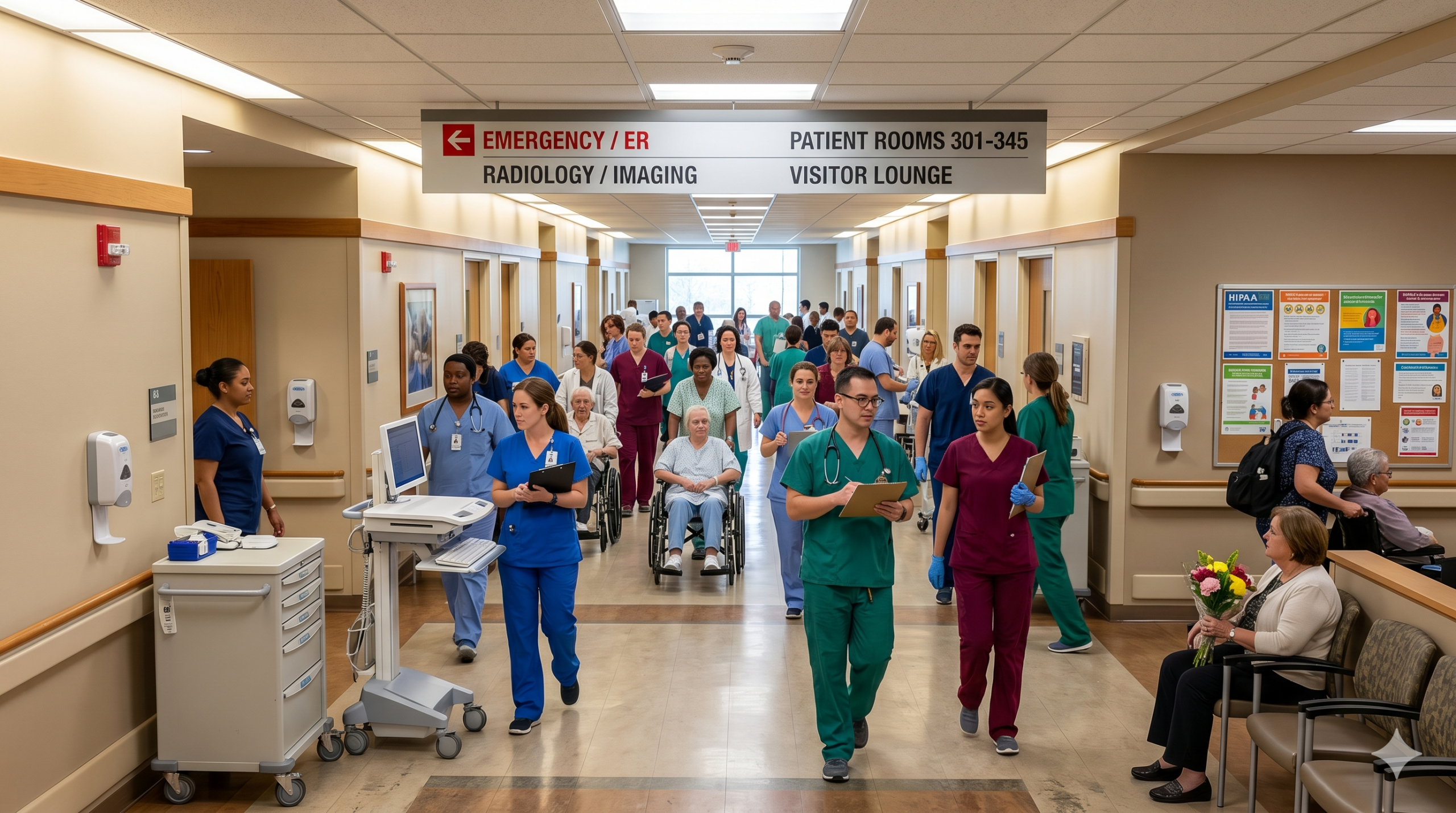
Hospital hallways are no longer simply transitional spaces. Today, they function as active care zones where patients wait, healthcare workers move rapidly, medical equipment is transported, and critical healthcare activities often overlap.
As patient volumes continue to increase and healthcare facilities face ongoing staffing pressures, hospital hallway congestion has become a significant safety concern. What may appear to be a simple space management issue can directly impact patient safety, staff efficiency, infection prevention, and emergency response capabilities.
Poorly designed seating arrangements and inefficient corridor layouts often contribute to these challenges. To improve hospital corridor safety, healthcare facilities are increasingly exploring flexible, space-saving hospital seating solutions that support both patient comfort and operational efficiency.
The Growing Problem of Hospital Hallway Congestion
One of the most visible challenges in modern healthcare facility design is hallway congestion. Stretchers, wheelchairs, mobile medical equipment, healthcare staff, visitors, and patients all compete for limited corridor space throughout the day.
Traditional fixed seating often worsens the problem by permanently occupying valuable hallway clearance areas, regardless of whether seating is actively needed.
Common Causes of Hospital Hallway Congestion
- Reduced emergency access and slower patient transport
- Narrow pathways for wheelchairs and walkers
- Increased staff fatigue from navigating around obstacles
- Crowded waiting areas extending into traffic zones
- Limited flexibility during peak patient hours
When hospital hallways become obstructed, response times may slow significantly. Emergency teams transporting patients or maneuvering crash carts can encounter delays that impact care delivery. Even routine movement by nurses, aides, and support staff becomes more difficult and physically demanding.
Fixed seating also lacks adaptability. During busy periods, additional seating may be beneficial. During slower periods, those same chairs become unnecessary obstacles. This highlights a major limitation of traditional hospital seating solutions: they remain static in environments that require flexibility.
Patient and Staff Safety Risks in Congested Hospital Corridors
Cluttered hospital hallways create numerous safety risks for both patients and healthcare workers. Patients who rely on wheelchairs, walkers, canes, or other mobility aids are especially vulnerable when navigating crowded corridors.
Safety Risks Associated with Congested Hallways
- Trip-and-fall accidents
- Wheelchair and walker navigation difficulties
- Staff collision injuries
- Delayed emergency response
- Blocked evacuation routes
- Increased physical strain on healthcare workers
For elderly patients and individuals recovering from surgery or illness, even a minor fall can lead to serious complications, extended recovery periods, or hospital readmission.
Healthcare workers face challenges as well. Nurses, patient transport teams, and support personnel often operate under significant time pressure. Constantly maneuvering around obstacles can increase physical strain and raise the likelihood of workplace injuries.
Blocked pathways may also interfere with emergency evacuations and rapid-response situations. In critical healthcare environments, every second matters. Effective healthcare facility design must prioritize clear and unobstructed movement throughout hospital corridors.
Infection Control Challenges Linked to Hallway Seating
Infection prevention remains a top priority in every healthcare facility. However, hallway seating is often overlooked as a potential contributor to contamination risks.
Traditional upholstered chairs can be difficult to disinfect thoroughly and may harbor bacteria, viruses, and other pathogens over time. In high-traffic hospital environments, maintaining clean and easily sanitized surfaces is essential.
Infection Control Concerns with Traditional Seating
- Difficult-to-clean upholstery materials
- Increased exposure to contaminated surfaces
- Obstructed access for environmental services teams
- Greater risk of cross-contamination
- Reduced compliance with infection prevention protocols
When fixed seating obstructs cleaning operations, environmental services personnel must work around obstacles, increasing the possibility that certain areas receive inconsistent sanitation.
These challenges can compromise infection control efforts and potentially contribute to healthcare-associated infections (HAIs). Modern hospital seating solutions should support infection prevention by incorporating durable, non-porous materials and minimizing unnecessary surface exposure.
Why Traditional Hospital Seating No Longer Works
Many existing hospital seating systems were designed decades ago and do not align with modern healthcare facility requirements. While comfort remains important, safety, flexibility, infection control, and space optimization have become equally critical.
Problems with Traditional Hospital Seating
- Permanently occupies corridor space
- Cannot adapt to changing patient volumes
- Creates unnecessary hallway obstacles
- Limits operational flexibility
- Often difficult to clean thoroughly
- Prioritizes seating capacity over efficiency
In facilities where every square foot matters, permanently installed seating reduces usable corridor width and limits workflow efficiency. These limitations directly conflict with current healthcare facility design principles focused on accessibility, safety, and adaptability.
Ultimately, outdated seating solutions often contribute to the very challenges they were intended to solve.
A Safer and Smarter Alternative for Hospital Hallways
Modern healthcare facilities require seating solutions that support patient comfort without compromising safety or efficiency. One effective approach is the use of fold-away, wall-mounted, self-closing seating.
Quick-Seat® provides a practical example of this type of hospital seating solution. When needed, the seat offers a stable and comfortable resting option for patients and visitors. When not in use, it folds neatly against the wall, restoring valuable corridor space.
The seating surface measures 20 inches by 14 inches with an 18-inch seating height, providing ergonomic support while maintaining a compact footprint.
When folded, the chair projects only 3¾ inches from the wall, helping preserve hallway clearance and improve traffic flow.
Benefits of Fold-Away Hospital Seating
- Maximizes usable hallway space
- Improves emergency access and response efficiency
- Reduces trip and collision hazards
- Automatically folds closed after use
- Simplifies cleaning and sanitation
- Supports infection prevention efforts
- Enhances healthcare facility flexibility
- Maintains patient comfort without permanent obstruction
The self-closing feature automatically returns the seat to its folded position after use, helping reduce the risk of seating becoming an obstacle in busy corridors.
From an infection control perspective, non-porous materials support fast and thorough cleaning. Because the seating surface remains folded when not in use, overall exposure to contaminants is also reduced.
By combining safety, hygiene, and space efficiency, wall-mounted seating offers a practical solution for modern healthcare environments.
The Future of Healthcare Facility Design
As hospitals continue to evolve, healthcare facility design must balance patient comfort with safety, operational efficiency, and infection prevention.
Hospital corridors are no longer passive spaces. They are critical pathways that support patient care, emergency response, transportation, and daily healthcare operations.
Space-saving hospital seating solutions help healthcare facilities create safer, cleaner, and more adaptable environments without sacrificing comfort. By replacing outdated fixed seating with flexible wall-mounted alternatives, hospitals can improve traffic flow, reduce safety risks, support infection control initiatives, and optimize valuable corridor space.
Frequently Asked Questions
Why is hallway congestion a safety issue in hospitals?
Hallway congestion can delay emergency response, increase trip-and-fall risks, obstruct evacuation routes, and make it more difficult for healthcare workers to transport patients and equipment safely.
How does seating affect hospital corridor safety?
Traditional fixed seating permanently occupies valuable corridor space, creating obstacles that can interfere with patient movement, staff workflows, and emergency access.
What type of seating is best for healthcare facilities?
Space-saving, wall-mounted seating solutions are often preferred because they provide patient comfort when needed while preserving corridor clearance when not in use.
How can hospitals improve infection control in hallways?
Hospitals can improve infection control by using non-porous, easy-to-clean materials, reducing clutter, improving cleaning access, and selecting seating designs that minimize unnecessary surface exposure.
What are the benefits of fold-away hospital seating?
Fold-away seating improves hallway safety, enhances traffic flow, supports infection prevention efforts, reduces trip hazards, and helps healthcare facilities maximize available space.
Quick Summary
Hospital hallway congestion directly impacts patient safety, staff efficiency, emergency response, and infection control. Traditional fixed seating often contributes to these challenges by permanently occupying valuable corridor space.
Fold-away, wall-mounted, self-closing seating provides a safer and more flexible alternative by:
- Restoring hallway clearance when not in use
- Reducing trip and collision hazards
- Improving emergency access
- Supporting infection prevention efforts
- Enhancing healthcare facility efficiency
As healthcare environments continue to evolve, adaptable hospital seating solutions play an increasingly important role in creating safer, cleaner, and more efficient facilities for patients, visitors, and healthcare professionals.your facility design.